 2026-06-18
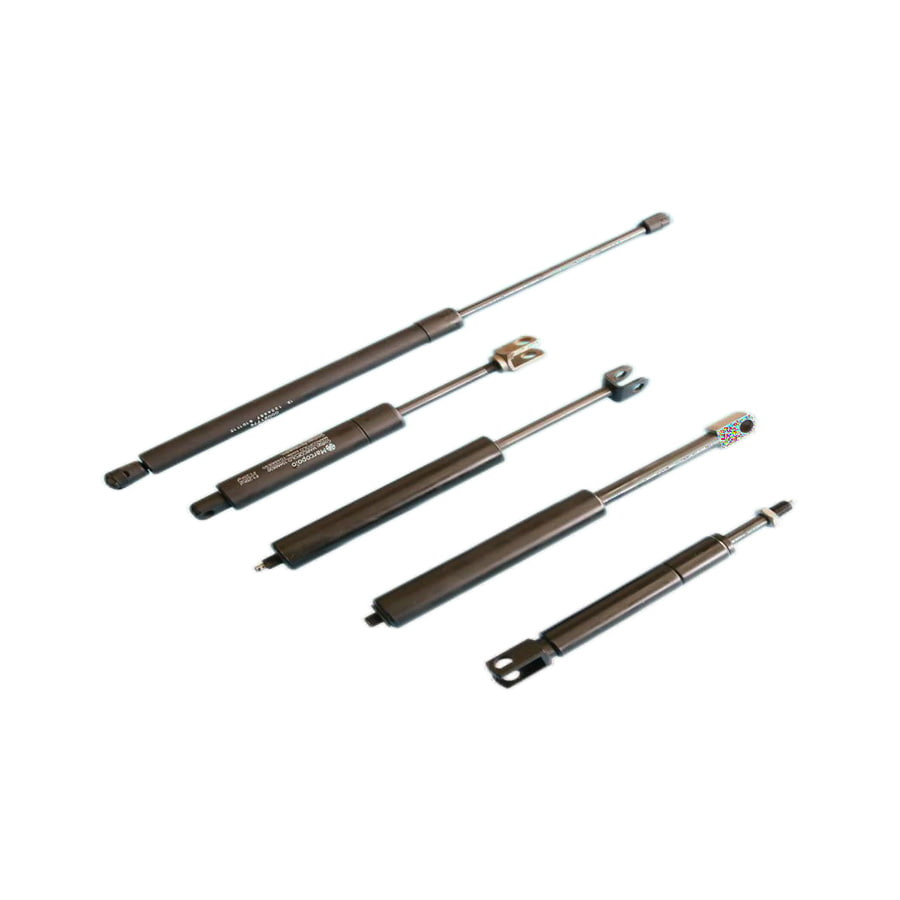
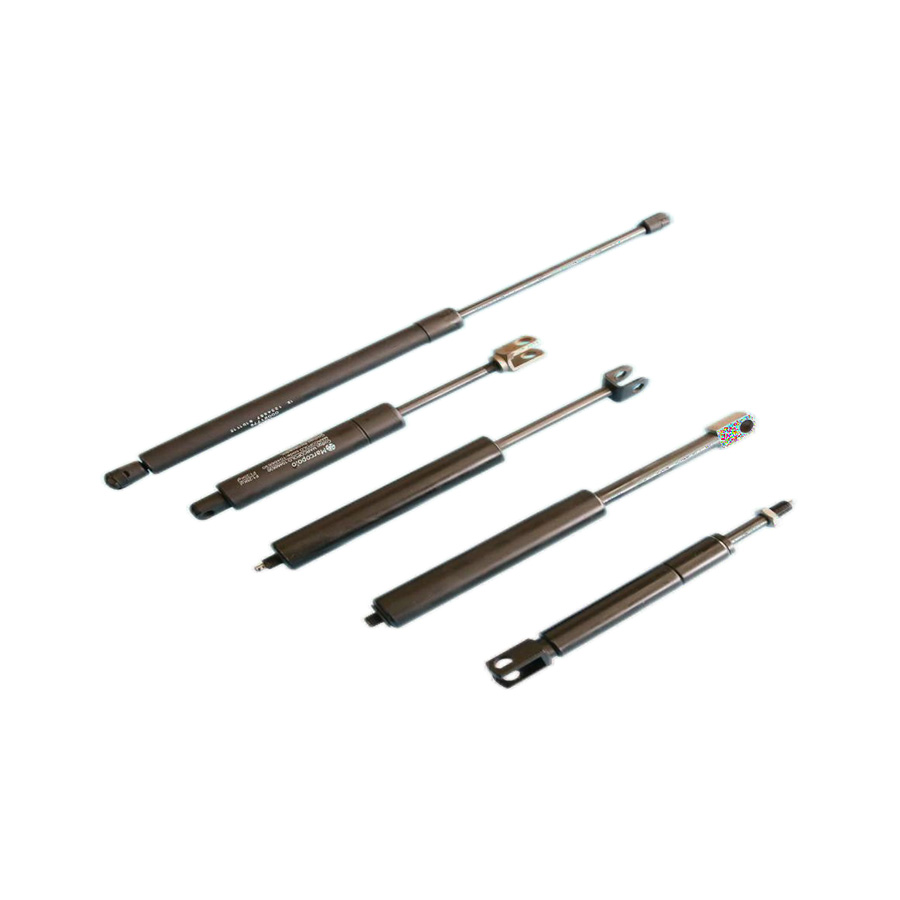
 A heavy-duty gas spring is a sealed cylinder filled with pressurized nitrogen gas that pushes or pulls a piston rod to lift, lower, hold, or dampen a load. Unlike a standard light-duty gas spring you might find on a cabinet door or a laptop lid, a heavy-duty gas spring is built to handle much larger forces, harsher environments, and far more demanding duty cycles. These components are not just bigger versions of the small struts found in furniture; they use thicker cylinder walls, reinforced seals, and stronger piston rods so they can survive constant use in factories, vehicles, and outdoor equipment without leaking or failing.
The basic working principle stays the same no matter the size: nitrogen gas is compressed inside a cylinder, and as the piston rod moves in or out, the gas pressure either resists compression (creating a lifting or supporting force) or resists extension (creating a damping or pull-back force). A heavy-duty gas spring simply scales this principle up, often combining a larger bore diameter and thicker piston rod to generate forces ranging anywhere from a few hundred newtons up to tens of thousands of newtons, depending on the design.
Because they combine high force output with a compact, maintenance-light design, heavy-duty gas springs show up in places where mechanical coil springs or hydraulic cylinders would be too bulky, too noisy, or too expensive to maintain. Industrial machinery is one of the biggest markets: presses, stamping equipment, conveyor systems, and large access doors on factory equipment all rely on heavy-duty gas springs to support heavy moving panels safely.
Automotive and transportation equipment is another major application area. Heavy-duty gas springs are used to lift truck hoods, tailgates, cargo box lids, and engine covers on buses and agricultural vehicles. In agriculture specifically, tractors, combines, and harvesters use heavy-duty gas springs to support engine covers and cab panels that need to open easily despite their weight. Medical equipment manufacturers also use them for height-adjustable treatment tables and patient lift systems, where smooth, controlled motion matters for both safety and comfort.
Choosing the right heavy-duty gas spring is mostly a matter of matching four specifications to your application: force, stroke length, cylinder diameter, and rod diameter. Get any one of these wrong and the gas spring will either fail prematurely or simply not do its job. Force is the most important number, since it determines how much weight the spring can lift or support, and it's typically measured in newtons (N) or pounds-force (lbf). Industrial nitrogen gas springs commonly cover forces ranging from around 22.5 to 10,000 daN, with body diameters varying from 19 to 165 mm, which shows just how wide the heavy-duty category actually spans.
Stroke length refers to how far the piston rod travels between fully compressed and fully extended positions, and it needs to match the actual range of motion your application requires — too short and the load won't reach its intended position; too long and the spring will bottom out under stress. Cylinder and rod diameter affect both the force capacity and the physical durability of the unit. One common heavy-duty configuration uses a piston rod diameter of 14mm or 20mm paired with a 40mm cylinder diameter, delivering force in the 1500N to 5000N range, which is a good illustration of how rod and cylinder sizing scale together with force output.
| Specification | Typical Light-Duty Range | Typical Heavy-Duty Range |
| Force Output | 30N - 400N | 1,500N - 10,000+ N |
| Rod Diameter | 6mm - 10mm | 14mm - 20mm+ |
| Cylinder Diameter | 15mm - 22mm | 28mm - 165mm |
| Typical Duty | Furniture, electronics | Industrial, automotive, marine |
Heavy-duty gas springs generally come in two basic motion configurations, and picking the wrong one is one of the most common mistakes buyers make. A push-type (compression) gas spring extends outward and resists being compressed, making it the right choice for lifting lids, hoods, and covers that need to be held open against gravity. A pull-type (tension) gas spring works in reverse — it resists extension and pulls back toward its compressed state, which makes it useful for applications like closing doors automatically, retracting components, or holding a folding mechanism shut.
Beyond the basic push or pull function, many heavy-duty gas springs also include a locking or damping feature. Locking gas springs allow the rod to be held at any point along its stroke once a control lever is released, which is especially useful in adjustable furniture, medical tables, and machinery where an operator needs to set and hold a specific position. Damping gas springs, by contrast, are designed to slow down motion smoothly rather than lock it in place, which protects both the equipment and the operator from sudden, jarring movements.
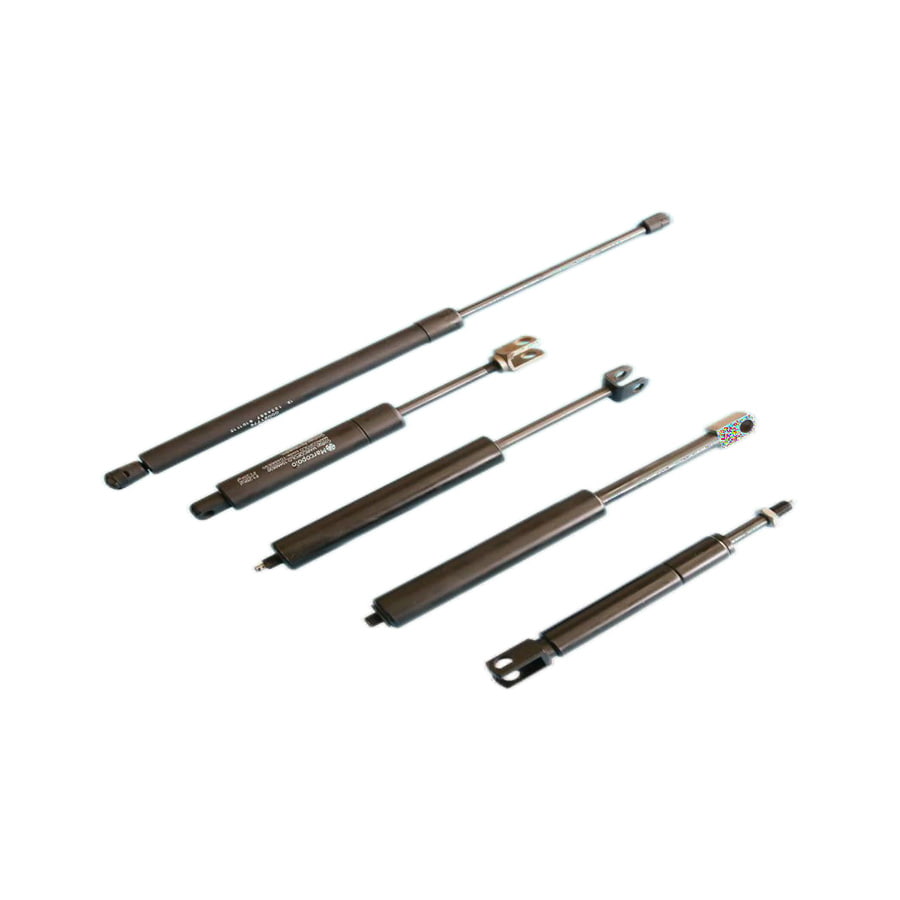
A heavy-duty gas spring is only as good as the materials and finishing process used to build it, since these components routinely operate in dirty, wet, or temperature-extreme environments. Standard heavy-duty units are typically made from carbon steel cylinders and rods, then protected with coatings such as zinc plating, electrostatic powder coating, or QPQ (quench-polish-quench) treatment. Some manufacturers run salt spray testing on QPQ-treated units for more than 96 hours to verify corrosion resistance before the product ever reaches a customer, which gives a useful benchmark for how seriously durability should be evaluated when comparing suppliers.
For applications exposed to saltwater, chemicals, or constant moisture — marine equipment, food processing lines, or outdoor agricultural machinery — stainless steel construction is usually the better long-term investment, even though it costs more upfront. Stainless steel resists pitting and corrosion far better than coated carbon steel, and it holds up significantly longer in environments where a coating could eventually chip or wear through. Seal quality matters just as much as the metal itself; heavy-duty gas springs intended for harsh-duty or high-cycle use should use reinforced gland seals rated for extended service life, since seal failure is the most common reason gas springs lose pressure and stop working correctly.
Sizing a heavy-duty gas spring correctly starts with understanding the physics of the moving panel or load, not just guessing based on weight alone. The key factors are the weight of the panel, the distance from the pivot point (hinge) to the center of gravity, and the distance from the pivot point to where the gas spring will be mounted. Because gas springs work on leverage, mounting position changes the required force dramatically — a spring mounted closer to the hinge needs to generate more force than one mounted farther away, since it has less mechanical leverage to work with.
As a general rule of thumb, many engineers begin with a basic torque calculation: multiply the weight of the panel by the horizontal distance from the hinge to its center of gravity, then divide by the horizontal distance from the hinge to the gas spring's mounting point. This gives an approximate required force, which should then be adjusted with a safety margin and validated against the manufacturer's load chart or calculator tool. Skipping this step and simply ordering a gas spring based on "this looks about right" is one of the most frequent causes of premature failure, since an undersized spring will be overworked from day one while an oversized one can make the lid or panel dangerously difficult to close.
Proper installation has a major impact on how long a heavy-duty gas spring lasts in service. The most important rule is to avoid side loading: the gas spring should be mounted so the rod moves in a straight line relative to its bracket, without bending or twisting forces acting on it. Side loading wears out the rod seal much faster than normal use, eventually causing the unit to leak gas and lose its force output. Using ball joint end fittings rather than rigid fixed brackets is a common and effective way to reduce this stress, since ball joints allow the gas spring to self-align slightly as the panel moves through its arc.
On the maintenance side, heavy-duty gas springs are largely sealed, maintenance-free components by design, so there are no internal parts to lubricate or service. That said, periodic visual inspection is still worthwhile, especially in industrial settings with high cycle counts. Operators should check for visible oil residue along the rod (a sign of seal wear), unusual noise during operation, or a noticeable drop in lifting force, all of which indicate the unit is nearing the end of its service life and should be scheduled for replacement before it fails completely.
| Warning Sign | Likely Cause | Recommended Action |
| Oil film on rod | Seal wear or damage | Plan replacement soon |
| Panel sags or drifts down | Gas pressure loss | Replace the unit |
| Jerky or uneven motion | Internal damage or side loading | Inspect mounting alignment |
| Visible corrosion or pitting | Coating failure or wrong material | Switch to stainless steel option |
Because heavy-duty gas springs contain highly compressed nitrogen gas, they need to be handled with real respect for the pressure they store internally. The single most important safety rule is to never attempt to drill, cut, weld, or otherwise open a gas spring, even one that appears to be empty or non-functional, since residual pressure can cause a sudden and forceful release. Units should also be kept away from open flame and excessive heat sources, as elevated temperatures increase internal pressure beyond the design rating.
When a heavy-duty gas spring reaches the end of its useful life, it should be disposed of according to local regulations for pressurized components, not simply thrown in general scrap. Many manufacturers offer guidance or take-back programs for proper disposal. During normal operation, periodically check that mounting brackets and fasteners remain tight, since a loose bracket can allow the gas spring to detach unexpectedly under load — a serious hazard in any application where the spring is supporting a heavy panel above head height.
 KategoriRekommendera inlägg

Fenglan är Tillverkare av elektriska precisionsdelar i Kina, Tillverkare av precisionsdelar för fordon och Leverantörer av industriella precisionsdelar. Din pålitliga partner inom tillverkning av delar och komponenter sedan 2010
 Tel: +86-13861233850
  E-mail: [email protected]
  Add: No.60, East Zhuanghe Road, Chunjiang Town, Wei Village, Xinbei District, Changzhou City, Kina
  Sekretess


 +86-13861233850
 2025-09-17